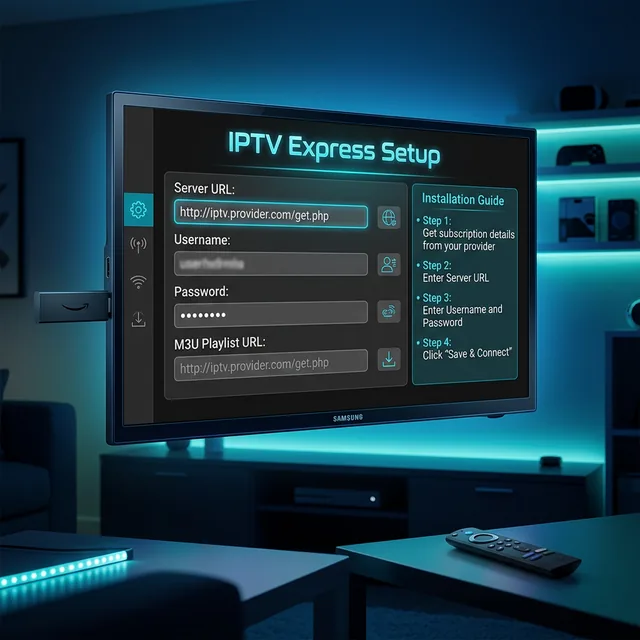
How to Fix IPTV Screen Aspect Ratio and Cutting Off Edges
Have you ever noticed that your IPTV picture doesn't fit your screen properly? Maybe the edges are cut off, there are black bars on all sides, or the image looks stretched and distorted. IPTV screen aspect ratio problems are frustrating, but they're usually easy to fix once you understand what's causing them.
Aspect ratio refers to the proportional relationship between the width and height of your video. Common ratios include 16:9 (widescreen), 4:3 (old TV format), and 21:9 (ultrawide). When the IPTV stream's aspect ratio doesn't match your TV's, you get picture problems.
Common Aspect Ratio Problems
- Picture cut off: Edges of the image are missing (especially scoreboards and subtitles)
- Black bars: Thick black borders around the picture
- Stretched image: Everything looks wider or taller than it should
- Zoomed in: The image is too large for the screen
- Pillarboxing: Black bars on left and right sides (4:3 content on 16:9 TV)
Fix 1: Adjust Your TV's Picture Settings
Your TV has aspect ratio controls that can fix most issues:
| TV Brand | Setting Location | Best Option |
|---|---|---|
| Samsung | Picture > Picture Size Settings | 16:9 or Fit to Screen |
| LG | Picture > Aspect Ratio | 16:9 or Just Scan |
| Sony | Picture > Screen | 16:9 or Full |
| TCL | Picture > Picture Size | 16:9 or Normal |
| Vizio | Picture > More Settings > Aspect Ratio | 16:9 or Wide |
Important: Avoid using "Zoom" or "Cinema" modes for regular IPTV viewing, as these often cut off edges.
Fix 2: Adjust the IPTV App's Aspect Ratio
Many IPTV apps have their own aspect ratio settings:
- TiviMate: Go to Player Settings > Aspect Ratio > choose "16:9" or "Original"
- IPTV Smarters Pro: Settings > General > Video Player Settings > Aspect Ratio
- Perfect Player:
Settings > Video > Aspect Ratio - VLC (external player): Right-click during playback > Video > Aspect Ratio
Fix 3: Check Your HDMI Output Settings
Some streaming devices have HDMI output settings that affect picture:
- Firestick: Settings > Display & Sounds > Display > Video Resolution > set to "Auto"
- Android TV Box: Settings > Device Preferences > Display > HDMI Settings
- Nvidia Shield: Settings > Display & Sounds > Resolution > match your TV
Get Perfect Picture Quality
High-quality IPTV streams with proper aspect ratio. Just $4.58/month or $55/year.
Fix 4: Use Overscan Settings
Overscan is a legacy feature where TVs zoom in slightly on the image. This often causes edges to be cut off. Most modern TVs have a way to disable it:
- Samsung: Picture > Picture Size Settings > set to "Screen Fit" or "Just Scan"
- LG: Picture > Aspect Ratio > "Original" or "Just Scan"
- Sony: Picture > Screen > "Full" or "Normal"
Disabling overscan usually fixes the cut-off edges problem immediately.
Fix 5: Stream Quality Related Issues
Sometimes the problem is the stream itself:
- Try a different channel: Some channels may have incorrect aspect ratio encoding
- Change stream quality: Try switching between HD and SD - sometimes SD streams have different aspect ratios
- Try a different player: Switch between ExoPlayer, IJKPlayer, or VLC
Frequently Asked Questions
Why are scoreboards cut off on my IPTV?
This is usually caused by overscan on your TV. Disable overscan or set picture size to "Screen Fit."What is the correct aspect ratio for IPTV?
16:9 is standard for most modern IPTV channels. Use "Original" or "16:9" in your app settings.Why do some channels look stretched?
The channel may be broadcasting in 4:3 format. Your TV may be stretching it to fill 16:9. Set your TV to "Normal" or "4:3" for these channels.Does aspect ratio change with stream quality?
Occasionally. Try switching between HD and SD if aspect ratio changes unexpectedly.Can overscan be permanently disabled?
Yes, most modern TVs allow you to set a fixed picture size. Set it to "Screen Fit" or "Just Scan."Related Videos
Related Articles
 Troubleshooting
How to Fix IPTV Aspect Ratio and Cutting Off Edges
 Troubleshooting
How to Fix IPTV Black Screen Issue on Any Device
 Troubleshooting
How to Fix IPTV Stream Not Starting (Black Screen)
TroubleshootingIPTV Frozen on Loading Screen: How to Fix
TroubleshootingCan My ISP Detect and Block IPTV? How to Stop It
TroubleshootingHow to Fix IPTV App Cache Issues on Firestick/Android